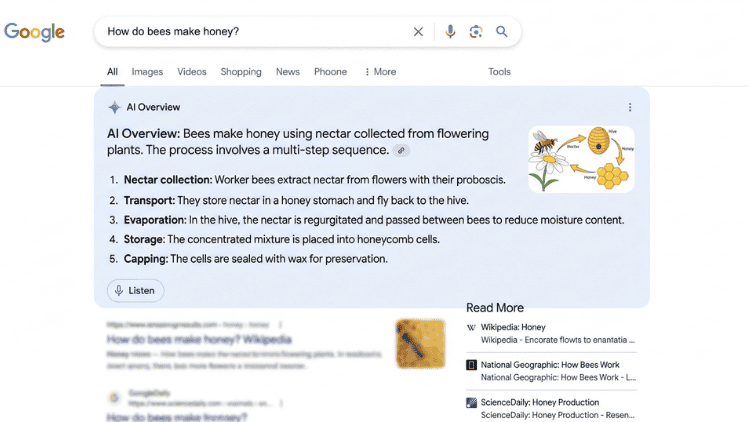
The landscape of search is undergoing a fundamental transformation as we move from traditional keyword-based retrieval to generative, intent-driven responses. Generative Engine Optimization, or GEO, is the next frontier for those aiming to maintain visibility in an ecosystem dominated by Large Language Models and AI-driven interfaces. Understanding the foundational concepts of how these engines perceive and synthesize information is an essential first step before diving into the granular tactics of optimization. As AI search becomes the default, the traditional blue-link paradigm is rapidly evolving into a conversational experience where the engine acts as an expert consultant rather than just a librarian.
Moving Beyond Keyword Constraints
At its core, AI-powered search engines do not just index pages; they synthesize information to create unique, conversational answers tailored to user intent. This means that content must move away from static keyword stuffing and toward comprehensive, entity-based knowledge that an AI can easily parse and trust. Distinguishing between older, keyword-reliant methods and this new era of intent-based retrieval is key to understanding the shift in execution needed to stay relevant. When optimizing for these engines, the priority shifts to being the definitive source of truth for an entity rather than just the highest-ranking URL for a query.
Modern search engines now utilize complex models that evaluate the information gain of a page. They prioritize content that offers unique insights, verifiable data, and a clear, logical structure that guides the model through your expertise. Unlike the past, where a list of synonyms could rank a page, today’s AI evaluates the semantic relationship between concepts. If your content merely repeats existing online information without adding depth or a unique perspective, generative engines will likely bypass your site in favor of more authoritative sources.
The Strategy for Answer Engine Intent
The primary strategy for GEO involves optimizing for answer engine intent, which requires a deep focus on factual accuracy, context, and structural authority. AI models rely on schemas, knowledge graphs, and semantic associations to verify the legitimacy of your content. At MetaEngine, we have observed that sites which prioritize clarity and direct value-driven answers are significantly more likely to be cited by generative models. By structuring your information so that it answers complex questions directly, you feed the AI the data it needs to form its generative response, ultimately increasing your brand’s presence in the search result.
When crafting your content, adopt a journalistic approach: lead with the direct answer, provide the supporting context in the following paragraphs, and use technical details for deeper exploration. This inverted pyramid style is naturally compatible with how LLMs process information. By anticipating the questions users are likely to ask within your niche, you position your content to be the definitive answer that the model selects. Furthermore, as AI models become more conversational, integrating long-tail, natural language queries into your headers—such as “How to,” “Why,” or “What is”—helps the engine map your content directly to specific user inquiries.
Leveraging E-E-A-T and Structural Authority
AI engines are designed to prioritize the most trustworthy information available, which makes Google’s E-E-A-T framework—Experience, Expertise, Authoritativeness, and Trustworthiness—critical for GEO success. You must ensure that your content is backed by verified authorship, transparent sources, and expert author bios that clearly define your credibility in the field. When an AI can verify that your content is written by a subject matter expert, the probability of your site being cited as a primary source increases significantly.
Additionally, technical stability remains the backbone of your strategy. AI crawlers favor sites that demonstrate excellent Core Web Vitals and fast loading speeds. A technically sound, mobile-friendly website ensures that AI models can crawl, render, and index your data without friction. You should also integrate multimedia elements like tables, charts, and infographics; these formats allow AI engines to parse complex data points more efficiently, often resulting in your data being showcased directly within the generative summary of a search result.
Building a Robust Knowledge Network
When building your content architecture, you must consider how each page serves as a node within a larger knowledge network. A vital part of this technical approach involves ensuring your site architecture is robust enough for AI crawling; professional AEO services can provide the necessary strategies designed to optimize your visibility in these answer-driven environments. Implementing structured data and semantic markup is not optional—it is the language through which your website communicates its expertise to AI models. Without this technical layer, even the most well-written content can remain invisible to generative search engines.
Furthermore, focus on entity mapping—ensuring that search engines recognize your brand and its expertise as an interconnected set of concepts. By utilizing specific schema markups like Organization, Article, FAQ, and HowTo, you explicitly tell the engine what your content is about and who is providing it. This structured data acts as a map for the AI, helping it traverse your site architecture and understand the topical relevance of each page. When your pages are logically linked within a cluster, you reinforce your authority, making it much easier for the engine to verify your site as a trusted source of truth.
Maintaining Topical Authority
Optimization for GEO is not just about the words on the page; it is about how those words map to real-world entities and concepts. You need to identify the core entities your business represents and ensure that your content clusters demonstrate topical authority across all of them. This creates a cohesive narrative that AI models can use to connect your content to specific user inquiries, making your site a go-to authority. By consistently producing high-quality, entity-rich content, you create a sustainable pipeline of visibility that evolves as AI search technology becomes more sophisticated.
Topical authority is developed by thoroughly covering a subject from multiple angles, leaving no relevant sub-topic untouched. If you are writing about AI SEO, you must also address the technical infrastructure, ethical implications, market trends, and practical application. By covering the entire breadth of a topic, you signal to the engine that your site provides a complete ecosystem of information. This is why a well-planned content cluster—where one pillar page links to multiple supporting, highly detailed articles—is the most effective way to rank in generative search environments.
Future-Proofing Your Digital Presence
Finally, the success of your GEO strategy depends on your ability to iterate based on performance data and changing AI behaviors. Because generative engines are constantly updating their training data and retrieval patterns, you must stay agile. By keeping your site updated with fresh, accurate information, you ensure that the AI continues to view your domain as a primary source of current and reliable data. This ongoing commitment to quality and technical precision is what defines the difference between businesses that get left behind and those that dominate the next generation of search.
The future of digital growth lies in moving beyond simple visibility. It is about becoming the primary data source that powers the AI’s intelligence. As you refine your approach, keep testing how your content appears in different generative results and adjust your structural data accordingly. The sites that provide the clearest, most accurate, and most context-rich information will ultimately be the ones that win in this new AI-driven search economy. Continuous learning and adaptation are not just recommended; they are the baseline for survival in a world where search is no longer a destination, but a conversation.