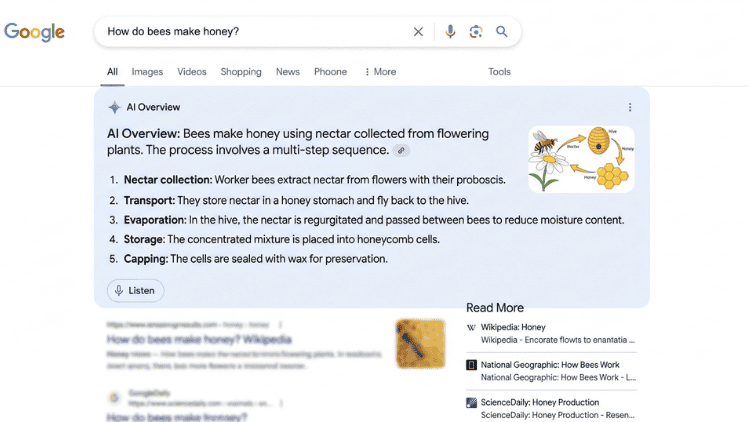
Search is evolving rapidly. Traditional search engine optimization is no longer the only strategy businesses need to focus on. With artificial intelligence becoming a major part of how users discover information online, businesses must adapt their optimization strategies to remain visible.
From Google AI Overviews and conversational search experiences to platforms like ChatGPT, Gemini, Claude, and Perplexity, users are increasingly receiving direct answers instead of browsing multiple websites. This shift has created the need for a new approach known as AI SEO.
Understanding AI SEO is essential for businesses that want to maintain visibility, authority, and long-term growth in modern search environments.
What Is AI SEO?
AI SEO, or Artificial Intelligence Search Optimization, is the process of optimizing content, website architecture, and authority signals to improve visibility within AI-powered search experiences.
Unlike traditional SEO, which primarily focuses on ranking web pages in search engine results, AI SEO aims to help businesses become trusted sources that AI systems reference, summarize, and recommend when generating answers.
The objective is not simply to rank higher but to increase the likelihood that your brand, expertise, and content are included in AI-generated responses.
Why AI SEO Is Becoming Important
The way people search for information is changing.
Instead of entering short keyword phrases, users now ask detailed questions and expect direct answers. AI-powered search platforms analyze information from multiple sources and generate responses that summarize the most relevant information.
As this behavior becomes more common, businesses that rely solely on traditional ranking strategies may experience reduced visibility. AI SEO helps organizations adapt to these changes by strengthening the signals that AI systems use to identify trustworthy sources.
Businesses that invest in AI SEO today are better positioned for future search environments.
How AI Search Works
AI-powered search systems process information differently from traditional search engines.
Rather than displaying a list of pages based solely on keyword relevance, AI systems analyze content quality, topical expertise, authority signals, user intent, and contextual relationships between topics.
They evaluate multiple sources before generating answers and recommendations.
To appear within these AI-generated responses, businesses need content that demonstrates expertise, technical accessibility, and strong authority signals.
AI SEO vs Traditional SEO
Traditional SEO focuses on improving rankings within search engine result pages. AI SEO expands beyond rankings and focuses on helping businesses gain visibility within AI-generated answers, summaries, and conversational search experiences.
While traditional SEO focuses on improving rankings within search engine results pages, AI SEO is designed to increase visibility across answer engines, AI-generated responses, and conversational search experiences. Businesses comparing AI SEO and traditional SEO strategies often discover significant differences in how search visibility is achieved and measured.
Traditional SEO remains an important foundation, but AI SEO helps businesses adapt to the growing influence of AI-powered search platforms and answer engines.
Key Components of AI SEO
Semantic Content Strategy
AI systems understand relationships between topics. Content should cover complete subject areas and answer related user questions instead of targeting isolated keywords.
Businesses that create comprehensive topic clusters often perform better in AI-driven search environments.
Topical Authority
AI platforms prefer sources that consistently demonstrate expertise within a particular field.
Publishing interconnected content across relevant subjects helps establish authority and improves the likelihood of being referenced in AI-generated answers.
Structured Data Implementation
Schema markup provides additional context about content, organizations, services, products, and other important entities.
Proper structured data helps search engines and AI systems better understand website information.
Technical SEO Foundation
Strong technical SEO remains essential.
Fast-loading pages, clean site architecture, crawlability, indexing, mobile responsiveness, and website security all contribute to better discoverability.
Entity Optimization
Modern search engines increasingly rely on entity understanding rather than simple keyword matching.
Businesses should establish consistent brand information, authoritative citations, and clear digital identity signals across the web.
Conversational Search Optimization
AI assistants process natural language questions.
Content should address real user queries using clear language, logical structure, and direct answers that align with conversational search behavior.
Common AI SEO Mistakes
Many businesses continue using outdated optimization practices that limit their visibility in AI-driven search environments.
Publishing Thin Content
Short content with limited value often fails to demonstrate expertise and authority.
Focusing Only on Keywords
Keyword optimization remains important, but AI systems evaluate context, relationships, and topical depth beyond individual keywords.
Ignoring Technical SEO
Technical issues can prevent AI crawlers and search engines from properly accessing and understanding website content.
Weak Content Structure
Poorly organized content can make it difficult for AI systems to identify key information.
Lack of Authority Signals
Businesses that fail to build trust, expertise, and credibility may struggle to appear in AI-generated recommendations.
Missing Structured Data
Without schema markup, search engines and AI systems may have difficulty understanding important website information.
Benefits of AI SEO
Businesses implementing AI SEO strategies can experience several advantages.
Improved Visibility
AI SEO helps brands appear within AI-generated summaries, recommendations, and conversational search responses.
Stronger Topical Authority
Comprehensive content strategies establish expertise within specific industries and subject areas.
Better Search Relevance
Content optimized around user intent often performs better across both traditional and AI-powered search experiences.
Increased Brand Recognition
Being referenced by AI systems can improve brand awareness and credibility.
Higher Quality Organic Traffic
AI-driven visibility often attracts users with stronger intent and greater engagement potential.
Future-Proof Search Strategy
AI SEO prepares businesses for the continued evolution of search technology.
How Businesses Can Get Started With AI SEO
The first step is evaluating existing content and technical infrastructure.
Businesses should identify content gaps, improve topic coverage, strengthen technical SEO foundations, and implement structured data where appropriate.
Building topical authority through interconnected content, optimizing for conversational queries, and improving entity recognition are also important components of a successful AI SEO strategy.
Organizations that approach AI SEO as a long-term authority-building initiative typically achieve the strongest results.
The Future of AI SEO
Artificial intelligence is expected to play an increasingly significant role in search experiences.
Users are becoming more comfortable interacting with AI assistants and receiving direct answers instead of navigating through multiple websites.
As this shift continues, businesses that establish strong authority, expertise, and technical accessibility will have a greater opportunity to appear in AI-generated recommendations.
AI SEO is not a replacement for traditional SEO. It is the next stage in the evolution of search optimization.
Businesses that combine traditional SEO best practices with AI-focused optimization strategies will be better positioned to compete in future search environments.
Final Thoughts
AI SEO is transforming how businesses build visibility online. As AI-powered search experiences continue to grow, organizations must move beyond basic keyword optimization and focus on authority, expertise, content quality, technical performance, and semantic relevance.
Businesses that invest in AI SEO today can strengthen their digital presence, improve discoverability, and position themselves for long-term success in an increasingly AI-driven search landscape.