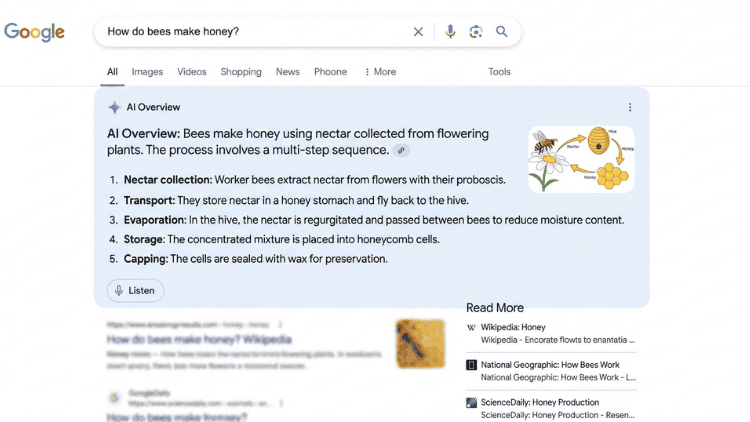


Understanding the Selection Mechanism for Google AI Overviews
Google AI Overviews are designed to synthesize vast amounts of information into concise, helpful summaries. When you conduct a search, the system does not simply copy and paste content. Instead, it evaluates the existing index to identify the most credible and contextually relevant passages to support its generated response. Understanding how Google AI Overviews choose sources is critical for marketers and business owners who want to remain visible in the evolving search landscape.
The Core Selection Criteria
Google employs several sophisticated layers to determine which sources earn a citation. The system relies on its established ranking algorithms, which have been refined over decades to prioritize information quality and user safety.
1. Information Quality and E-E-A-T
The foundation of source selection remains the E-E-A-T framework (Experience, Expertise, Authoritativeness, and Trustworthiness). Google’s models evaluate whether a source is considered an authority on a specific topic. Sites that demonstrate deep industry knowledge, maintain high editorial standards, and are frequently cited by other reputable domains are more likely to be selected.
2. Semantic Relevance
Beyond broad authority, Google looks for granular semantic relevance. The AI analyzes the intent behind your query and compares it against the content within potential sources. A source is prioritized if it directly addresses the specific sub-questions inherent in the query. If a paragraph provides a precise, factual answer to the “what” or “how” of a user’s search, it gains higher weight in the selection process.
3. Content Structure and Accessibility
The technical structure of your content plays a significant role in how easily the AI can parse and extract information. Google’s algorithms favor content that is logically organized. Using header tags, bulleted lists, and concise summaries helps the AI understand the hierarchy of your arguments. If the AI can quickly identify a clear, standalone answer within your text, it is more likely to feature that content as a source.
Factors That Influence Inclusion
While technical SEO remains important, the shift toward generative search requires a focus on providing value that is difficult for competitors to replicate. Here are key factors that influence source selection:
- Conciseness: Passages that answer a question directly without excessive filler text are preferred.
- Factuality: The system favors sources that provide verifiable data or commonly accepted facts, particularly for sensitive topics.
- Freshness: For time-sensitive queries, Google prioritizes the most recent and updated information.
- Diversity: The AI often draws from multiple sources to provide a balanced overview, meaning it may pick different sites for different facets of the same query.
How to Optimize Your Content for Citations
To improve the likelihood of your content being chosen for Google AI Overviews, you must focus on both the substance and the delivery of your information. Follow these actionable steps:
Create Authoritative Content Clusters
Instead of creating scattered, disconnected posts, develop comprehensive content clusters. By covering a topic from multiple angles, you signal to Google that your site serves as a central hub of knowledge for that subject. This increases your overall topical authority.
Use Clear, Declarative Language
Write your content with the intent of answering potential user questions directly. Use declarative sentences at the start of sections to define concepts clearly. This “answer-first” approach aligns perfectly with how the AI extracts snippets for its summaries.
Implement Structured Data
Schema markup helps search engines understand the relationships between pieces of content. By using appropriate schema types, such as FAQPage, Product, or HowTo, you provide Google with the context it needs to correctly categorize and display your information in AI-generated answers.
Prioritize User Experience
If the AI directs a user to your site, that site must offer a high-quality experience. Fast loading times, mobile-friendly design, and a lack of intrusive elements are essential. Google monitors engagement signals, and if users frequently bounce from your site after clicking a citation, it may negatively impact your site’s perceived value over time.
The Long-Term Perspective for AI Search
It is important to remember that Google AI Overviews are an extension of the search ecosystem, not a replacement for high-quality content. The system requires high-quality sources to function. By focusing on creating original, accurate, and structured information that genuinely helps your target audience, you align your strategy with the goals of Google’s ranking systems. Regularly audit your content to ensure it remains accurate and relevant, and continue to monitor how your industry queries are being summarized in search results. Consistency and depth will always remain the most reliable path to maintaining search visibility, regardless of how the presentation layer of Google search continues to evolve.