
Your Patients Search From Two Postcodes. Does Your Clinic Show Up in Both?
A patient looks for a dentist near home in the evening and near the office at lunchtime. Google shows them two different map packs. Most Dublin clinics appear in one of them, if that.
Prefer to write? Send us a message
- Home and work catchments
- Copy within Dental Council rules
- Senior team on Irish hours
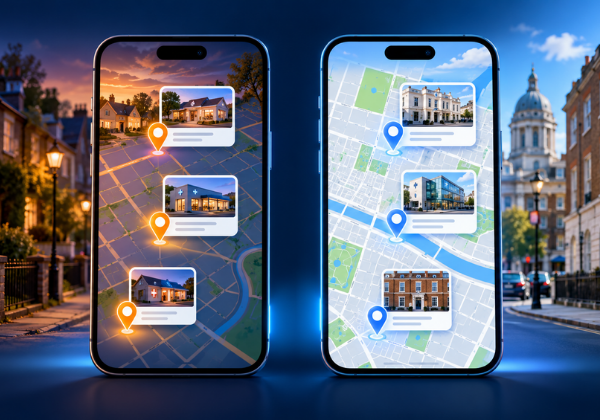
Same search, two places, two different map packs.

Same Clinic, Two Different Search Results
Search “dentist near me” from home in the evening, then from the office at lunchtime. Google usually shows two different sets of clinics, because it starts from where the phone is.
At home in Clontarf
Google shows clinics a short drive or walk away. A clinic in Dublin 2 rarely makes the three map-pack spots here, however good its reviews.
At the office on Harcourt Street
The same phone now gets city-centre clinics, often the ones with lunchtime slots. The north-side practices drop out.
Why the map pack changes
Google weighs three things: how close the clinic is, how well the listing matches the search, and how well known and reviewed it is. You cannot move your address. You can make your listing and website match both groups of patients.
Local SEO for clinicsWhere Your Patients Live, and Where They Work
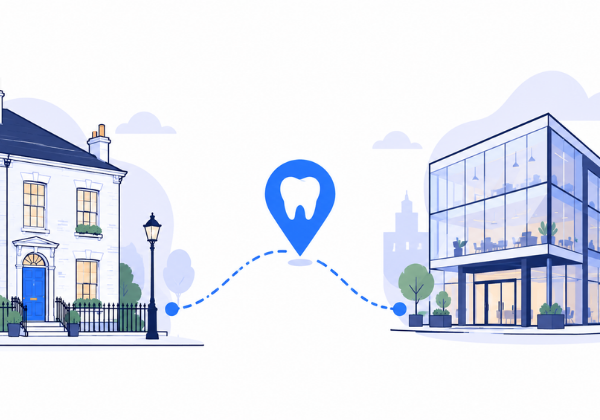
Most Dublin clinics draw patients from two places. Your SEO should be built for both, not for the word “Dublin”.
The home catchment
Families, retired patients and people who work from home. They book check-ups, children’s visits and hygiene appointments, often in the evening or on a Saturday, and search by their own area name.
The work catchment
Office workers in the city centre, the Docklands and business parks like Sandyford and Citywest. They want a slot near the desk, at lunchtime or before nine, and search “near me” during the working day.
What one address can win
A Ranelagh practice can compete in Ranelagh, Rathmines and Milltown, and reach Dublin 2 office workers with the right content. It will not show up in Swords. We show you where you can win and where you would be paying for nothing.
Patient is searching from
From home: strong nearby, invisible across the river
- Ranelagh Top 3
- Rathmines Top 3
- Clontarf Not showing
That is normal. A Ranelagh clinic does not need north-side home searches. It needs to own the areas around its door.
From the office: close, but not close enough
- Dublin 2 4 to 10
- Sandyford 4 to 10
- Docklands Not showing
This is where most clinics lose new patients. Content for office workers and a sharper Google profile can lift Dublin 2 into the top three.
Illustrative example for “Clinic A” in Ranelagh, not a real clinic’s results. Your free check shows your real positions.
What Dublin Patients Actually Type
Patients do not search for “dental services”. They search for a problem, a cost or a time. We group searches by what the patient is ready to do, then build the page that answers it.
Your site needs: opening hours, a same-day policy and a booking button on the first screen.
Your site needs: a clear PRSI page, a plain answer on medical cards, and published prices.
Your site needs: one honest page per treatment: who it suits, the steps, a cost range and who does it. Treatment pages
Example searches. Your free check adds the live Dublin search volumes for your own areas and treatments.
Reviews Move the Map Pack. The Dental Council Sets the Limits.
For a clinic, reviews do two jobs. They help decide whether you appear in the map pack, and they decide which clinic in the pack gets the call. Patients read them for pain, nerves, children, surprise costs and waiting times.
Ask every patient
One link by text after the visit. Asking only the happy patients breaks Google’s rules.
Reply without confirming care
Answer every review, good or bad, without saying the person is a patient or naming any treatment.
No rewards for reviews
Never offer a discount or gift for a review. Google removes incentivised reviews.
Real testimonials only
Website testimonials must come from real patients who had that treatment. If anyone was paid, say so.
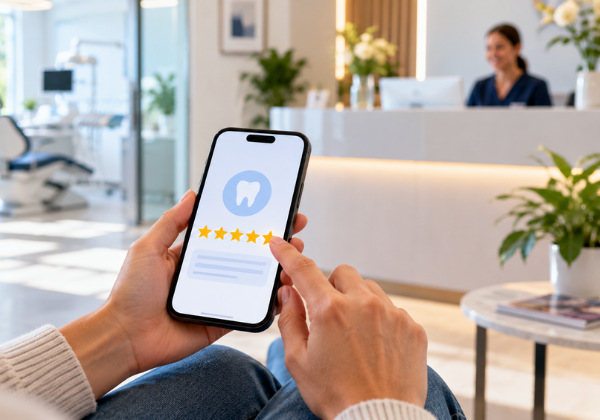
“I’m a very nervous patient and the whole team put me at ease.”

What a Dental Website in Ireland Cannot Say
The dentist, not the agency, answers for what the website says. So anyone writing your content needs to know these rules before they start.
No “specialist” or “special interest”
Unless you are on the Register of Dental Specialists, which covers only orthodontics and oral surgery. We write “dental implants in Ranelagh”, never “implant specialist”.
No subjective claims or promises
No “best dentist in Dublin”, no “painless treatment”, nothing that sets up expectations a treatment may not meet.
Your own before and after photos
Use your own work with written consent, or label clearly any image that is not.
The details your site must show
Practice name and address, opening hours, phone and email, the principal dentist’s name and qualifications, and when the site was last updated. Prices and your registration number are recommended.
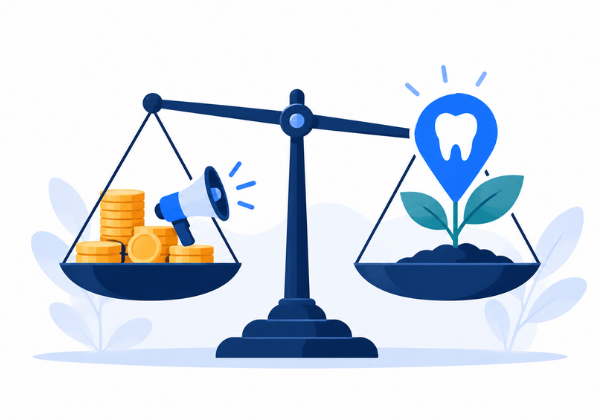
SEO or Google Ads for a Dublin Clinic?
Both work. They do different jobs, and many clinics need both for a while.
What We Do for Dublin Clinics
We use only the parts your clinic needs. Most start with the Google profile and the two catchments.
Google profile and area pages
Categories, services, photos and posts set up for both catchments, plus one page per area you genuinely serve.
Best fit: Local SEOLearn moreTreatment pages patients trust
Implants, aligners, whitening, emergency care and PRSI, each answered clearly and within the rules.
Best fit: Semantic SEOLearn moreA site that books
Fast on a phone, hours and prices easy to find, and booking that still works at 8pm.
Best fit: Technical SEOLearn moreNamed in AI answers
When a patient asks ChatGPT for a dentist in Ranelagh open on Saturdays, your clinic should be one of the names.
Best fit: AI SEO and AEOLearn moreNeed a new clinic website? See our website design service
See Where Your Clinic Shows Up, From Home and From Work
Tell us your clinic and two areas: where your patients live, and where they work. We check where you appear in the map pack for five common searches in each area.
What you get back
- Your position in both areas, with screenshots
- The three clinics ahead of you, and why
- The gaps in your Google profile and website
- Anything on your site that may breach Dental Council rules
No cost, no obligation. Usually back within two working days.

Why Clinics Work With Us
You talk to the strategist
The person planning your SEO is the person on the call.
Your sign-off on every clinical word
We draft; you approve before anything goes live.
Booked appointments, not rankings
Reports show the calls, booking requests and forms that came from search.
Honest about where we are
A remote senior team working Irish hours, led by founder Gaurav Sharma. No Dublin office, and we will not pretend otherwise.
Tell us about your clinic
Your clinic name, your two areas, and what you want more of. We reply within 24 hours.
Share a few details and get a tailored proposal.
Request a Free QuoteMore on Dublin SEO
Dental SEO in Dublin is about two catchments. Other Dublin businesses have a different problem.
Why Dublin is twenty search markets, not one, and how area-first SEO works across the county.
Google Business Profile, area pages and reviews that win the map pack where you actually work.
How we work with businesses in Cork, Galway, Limerick and seven more Irish cities.
Questions Clinic Owners Ask Us
Straight answers, including the ones that might talk you out of hiring us.
How long does SEO take for a dental clinic in Dublin?
Google profile and website fixes can move you in the map pack within weeks. Competitive treatment searches, like implants in a busy area, usually take three to six months. We tell you which is which for your areas before you start.
Can my clinic rank in areas where we do not have a surgery?
In the map pack, rarely: Google ties it to your address. In normal search results, yes, with a genuinely useful page for patients from that area, such as office workers who can reach you at lunchtime. We never use virtual offices or fake addresses; Google suspends listings that do.
Can we call ourselves implant or cosmetic specialists on our website?
Only if you are on the Dental Council’s Register of Dental Specialists, which covers orthodontics and oral surgery. The Dental Council also bans phrases like “special interest”. We write about the treatment, not the title, and it ranks just as well.
Should we have a separate page for PRSI patients?
If you are a registered Treatment Benefit provider, yes. Patients search for it by area. A clear page explains who qualifies, what is covered (a free exam once a year and a scale and polish for no more than €15), and how to book.
We are not on the medical card scheme. Should our website say so?
Yes. Fewer than 600 dentists now work under the medical card scheme, so patients ring around. One clear line saves your front desk time. If you are on the scheme, say that clearly too.
Can we use before and after photos and patient reviews?
Yes, with care. Photos should be of your own work, or clearly labelled if not, and need the patient’s written consent. Website testimonials must come from real patients who had that treatment. Google reviews must never be rewarded with a discount or gift.
We are already busy. Is SEO worth it for us?
Perhaps not for check-ups. It can be worth it for the treatments you want more of, or to replace patients who move away. If your books are full and you cannot hire, we will tell you to wait.
Find Out Where Your Clinic Is Missing
Two areas, five searches each, plain-English results. No cost and no obligation.