
How Does a Dublin Client Choose an Accountant or Solicitor? Mostly Before They Ring You.
A company director looking for an accountant, or a family that needs a probate solicitor, reads for days before making one call. They compare websites, read guides, check reviews and ask ChatGPT. By the time your phone rings, the choice is mostly made.
Prefer to write? Send us a message
- Built for long research cycles
- Written within LSRA and accountancy rules
- Senior team on Irish hours

- Day 1Searches how probate works
- Day 4Reads two firms’ guides
- Day 9Rings one firm
An example path. The call comes last.

Five Steps Between a Problem and Your Phone
Nobody picks a solicitor or an accountant from one search. A person dealing with an estate and a company outgrowing its bookkeeper both go through the same five steps. Your website has a job at every one of them, not only the last.
A person
Something happensA parent dies and there is a house to sell.
what to do when someone dies IrelandA business
Something changesThe company is about to take on its first employees.
register as an employer IrelandWhat your site needs
A plain guide that answers the first question, written for someone who has never hired a solicitor or accountant before.
A person
Reads to understandWants to know the steps, how long it takes and roughly what it costs.
how long does probate take in IrelandA business
Weighs up optionsCompares a sole trader with a company, or checks whether the company needs an audit.
do small companies need an audit IrelandWhat your site needs
Guides with a named author, their qualifications and the date they were last checked. This is where trust starts.
A person
Looks for a firm nearbyNow searches with an area or “near me”.
probate solicitor Dublin 6A business
Looks for a firm that knows themSearches by the type of client or the problem, not the area.
accountant for limited company DublinWhat your site needs
One page per service, pages for the areas and sectors you really serve, and a Google profile that lists the same services.
A person
Checks you outReads Google reviews, looks at the solicitor’s profile and asks a friend about the firm.
A business
Checks you outLooks at partners on LinkedIn, looks for clients like them, and asks ChatGPT for a shortlist.
What your site needs
Real profiles with qualifications and years in practice, recent reviews, and a clear idea of how you charge.
A person
Rings one firmUsually the firm that explained things most clearly.
A business
Books one or two callsWith the firms that seemed to understand their sector.
What your site needs
A short form, a phone number that gets answered, and one line on what happens at the first meeting.
Three Dublin Firm Websites, Checked Against What Clients Look For
We picked three independent Dublin accountancy firms a small business could easily compare, kept their names private, and checked each website for the eight things clients look for before they call.

What we found: none of the three showed the author’s qualifications on its guides, only one explained its fees, and none had its own page for each sector or area it serves. Every gap is a question a client takes to another firm’s website. Content that answers client questions
Learning Searches Are National. Choosing Searches Are Local.
Nobody types “Dublin” when asking how probate works. They add the area, or the type of client they are, only when they start looking for a firm. A Dublin firm needs pages for both kinds of search.
Learning pages earn the first visit. A client who read your probate guide in week one is far more likely to ring you in week three than a firm they have never heard of.
Timing matters for tax. Tax return searches build through September and October, ahead of Revenue’s 31 October pay-and-file deadline. A tax guide published in late October is too late. Publish it by the summer.
Searches grouped from our own research into how Irish clients look for legal and accounting help.

What ChatGPT Says When Clients Ask for a Firm
More business owners now ask ChatGPT, Perplexity or Google’s AI Overviews for a shortlist before they search. So we ask them too, using the questions real clients ask.
- Can you recommend an accountant in Dublin for a small limited company?
- Which solicitors in Dublin handle probate?
- How much does a solicitor charge for conveyancing in Dublin?
Is your firm named?
If three firms are named and yours is not one of them, you lose clients who never open Google.
Which pages does the answer lean on?
AI answers quote pages that answer the question directly. Those are usually guides, not service lists.
Is anything about you wrong?
An old address, a partner who left, a service you stopped offering. We find it and fix the source.
Get named in AI answersOne Probate Page, Before and After
An illustrative example, not a client page. The same firm and the same service, written two ways. The second version is the one a grieving family reads to the end.
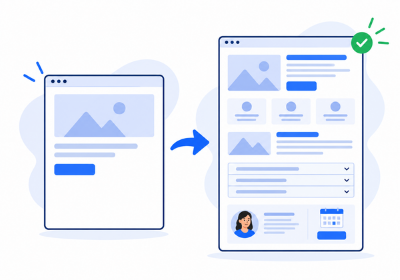
About 150 words
“We offer a comprehensive probate service. Contact us today.”
- No steps, no timeline, nothing on cost
- No named solicitor, so no reason to trust it
- No date, so no way to tell if it is current
- One contact button at the very bottom
A guide a family can follow
Written for the person who has just been named executor.
- The steps from the death to the final distribution, in plain English
- A realistic timeline, and what usually slows it down
- How fees are worked out, and what the first meeting covers
- Answers to the questions families ask, like selling the house
- Written and signed off by a named solicitor, with the date last reviewed
- A short form near the top for people ready to talk
What changes: the page now answers the questions behind “how long does probate take in Ireland”, so the family finds the firm while they are still learning, not only when they are ready to choose. The same approach works for an accountant’s page on company set-up or tax returns.
What Your Website Cannot Say
Solicitors and accountants both have advertising rules, and your website counts as advertising. We write within them, and you sign off before anything goes live.
Solicitors
Legal Services Regulation Act 2015 (Advertising) Regulations 2020, enforced by the LSRA
No success rates
You cannot state or hint at how often you win.
No “no win, no fee” or “free first consultation”
These and similar phrases are banned for personal injury work.
No client or case details without consent
Each client must agree first, unless the details are already public.
Nothing that reflects badly on another firm
And nothing false, misleading or in bad taste.
A costs statement where needed
Pages about personal injury or other contentious work must refer to the section 149 rules on charging.
Accountants
Your accountancy body’s code of ethics
No exaggerated claims
Marketing must be honest. “The best accountant in Dublin” is out.
No putting down other accountants
Comparisons that disparage another firm breach the same codes.
Use your designation exactly as your body allows
Say which body you belong to, and use its title correctly.
Keep client details confidential
Case studies need the client’s agreement or must be fully anonymised.
This is a summary, not legal advice. Solicitors can read the full Advertising Regulations (S.I. No. 644 of 2020). Accountants should check their own body’s current code.
What We Do for Dublin Firms
We use only the parts your firm needs. Most firms start with the guides their clients read first.
Guides clients read first
Probate, conveyancing, tax returns, company set-up. One clear guide per question, checked and signed off by your team.
Best fit: Semantic SEOLearn moreService, sector and area pages
A page for each service and each type of client you want, plus a Google profile that lists the same services.
Best fit: Local SEOLearn moreNamed in AI answers
When a director asks ChatGPT for an accountant for a Dublin start-up, your firm should be one of the names.
Best fit: AI SEO and AEOLearn moreA site that earns the call
Fast and easy to read on a phone, with profiles, fees and contact details where clients look for them.
Best fit: Technical SEOLearn moreNeed a new firm website? See our website design service
See Your Website the Way a Client Compares It
Tell us your firm and the service you want more work in. We compare your site with three Dublin firms your clients are likely to read, and ask ChatGPT and Google’s AI Overviews the questions your clients ask.
What you get back
- The client questions your site does not answer
- How three local firms answer them (names kept private)
- Whether AI answers name your firm, with screenshots
- Anything on your site that may break LSRA or accountancy rules
No cost, no obligation. Usually back within two working days.

Why Firms Work With Us
You talk to the strategist
The person planning your SEO is the person on the call. No account managers in between.
You approve every legal and tax statement
We draft. You check the technical detail and the rules before anything goes live.
Consultations, not rankings
Reports show the calls, forms and consultation requests that came from search.
Honest about where we are
A remote senior team working Irish hours, led by founder Gaurav Sharma. No Dublin office, and we will not pretend otherwise.
Tell us about your firm
Your firm, the services you want more work in, and the clients you want to reach. We reply within 24 hours.
Share a few details and get a tailored proposal.
Request a Free QuoteMore on Dublin SEO
Accountants and solicitors win on trust built before the call. Other Dublin businesses have a different problem.
Why Dublin is many local search markets, not one, and how area-first SEO works across the county.
Why a clinic has to win the map pack near patients’ homes and near their offices.
How we work with firms in Cork, Galway, Limerick and seven more Irish cities.
Questions Firms Ask Us
Plain answers. If SEO is not right for your firm yet, we will say so.
How long does SEO take for an accountancy or law firm in Dublin?
Fixes to your Google profile and service pages can show within weeks. Guides that rank for learning searches usually take three to six months, and longer for crowded topics like conveyancing. We tell you which is which for your services before you start.
Can solicitors in Ireland advertise online?
Yes, within the Legal Services Regulation Act 2015 (Advertising) Regulations 2020. Your website counts. You cannot mention success rates, use phrases like “no win, no fee” for personal injury work, or publish client details without consent. We write within those rules, and you sign off every page.
Can we publish case studies?
Only with the client’s agreement, unless the details are already public. Many firms write anonymised worked examples instead, showing how they handle a type of matter. These are often more useful to a new client anyway.
Should we put our fees on the website?
You do not have to, but cost is one of the first things clients search for. If fixed fees do not suit your work, explain what drives the cost and what the first meeting covers. Clients who understand how you charge are more likely to call.
Do we need a separate page for each service?
Yes. Someone searching for an employment solicitor does not want a page that also covers conveyancing and family law. One page per service lets each one answer its own clients’ questions and appear for its own searches.
Most of our work comes from referrals. Why bother with SEO?
Referred clients still look you up before they call. If your website is thin or out of date, some of them choose the other name they were given. For many firms, SEO protects referrals as much as it finds new clients.
Will SEO bring us enquiries we cannot use?
It can, if pages target the wrong searches. We build pages around the work you want more of, and each guide says who should get professional help and who can manage alone. That filters out enquiries before they reach your phone.
See What Clients Find Before They Call You
Your site against three Dublin firms, plus what ChatGPT says about you. No cost and no obligation.