
Tourists Fill August. Locals Fill February. Your Google Listing Has to Win Both.
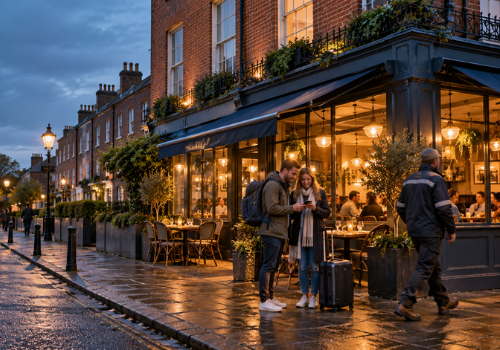
Ireland had 772,800 overseas visitors in August 2025 and 304,300 in February. A Dublin restaurant or hotel that only shows up for visitors has a long, quiet winter. One that only shows up for locals misses the summer. The same Google listing has to work for both.
Prefer to write? Send us a message or WhatsApp us
- Planned around the season, not a fixed list
- Restaurants, cafés, pubs and hotels
- Senior team on Irish hours
Source: CSO, Inbound Tourism December 2025.
Click a Month. See Who Is Searching, and What to Publish.
The bars are real: overseas visitors to Ireland each month in 2025, from the CSO. Visitors more than double between February and August. Locals do not follow that curve. They book around Valentine’s, Communions, Christmas parties and match days. Your website and Google profile need to be ready a few weeks before each one.
Overseas visitors to Ireland by month, 2025. Source: CSO, Inbound Tourism December 2025 (6.4 million visits in the year).
Locals are booking for
Late summer evenings, birthdays and staycations. Many regulars are away, so midweek tables lean on visitors.
Publish or update now
Fresh photos, replies to every review, and pages for the places visitors search from, like “near Trinity College” or “near the Convention Centre”.
Want this calendar for your own place?We map your busy and quiet months to the searches that can fill them.
A Visitor and a Regular Never Type the Same Thing
Visitors search by landmark, by type of food and by “open now”. Locals search by their own area and by the occasion. One listing and one website have to answer both, without reading like a tourist brochure to the people who live here.
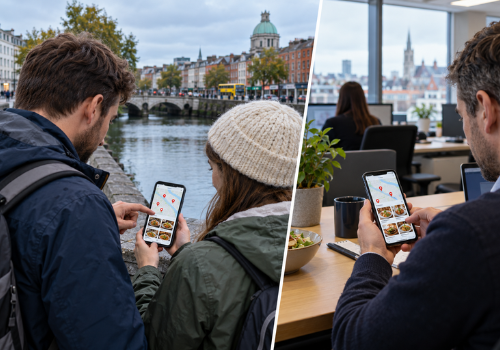
Searches grouped from our own research into how visitors and locals look for places to eat and stay in Dublin.
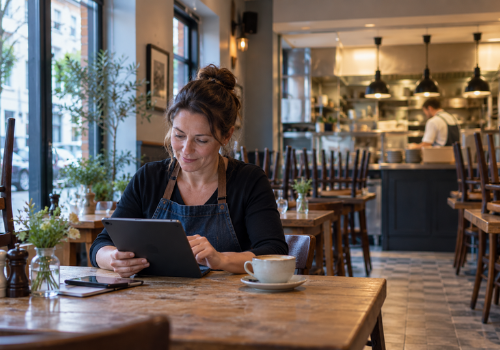
A Visitor Has Never Heard of You. Your Reviews Are All They Have.
A local may know your name from a friend. A visitor picks from the map, and reads reviews to decide. Reviews also help decide whether you appear in that map at all.
“Great chowder and brown bread, friendly staff. Waited 25 minutes for a table even with a booking.”
Reply to visitors too
They will never be back, but the next visitor reads your reply. Keep it short, calm and specific.
Let guests name the dish
“Best chowder near Trinity” helps the next search for chowder. You can ask guests to mention what they had. You cannot write it for them.
No free dessert for a review
Google removes reviews given in return for a discount or gift, and can restrict your listing.
Photos every month
Your own photos of real plates, rooms and the dining room. Visitors trust them more than stock shots.
Grow reviews the right wayBooking Sites, Google and Your Own Website: Who Owns the Guest?
Booking and reservation sites bring guests you could not reach alone. They also take a cut and keep the guest’s details. Each channel has a job. The mistake is letting one do all of them.
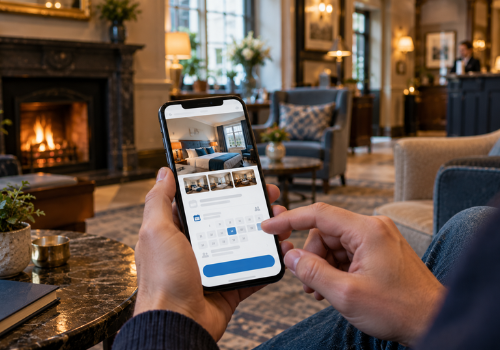
Our honest view: keep the booking sites for reach in high season. Use your Google profile and website to win repeat guests, locals and the quiet months, where every direct booking saves you a commission. Pages that win direct bookings
What Your Menu Must Get Right, on the Door and Online
Irish rules on prices and allergens apply at your premises. Your website and Google listing are where guests read the same menu first, so keep them in step.
Prices at the entrance
Under the Retail Price (Food in Catering Establishments) Display Order 1984, prices must be shown at or near the entrance, as final prices including taxes, with any service or cover charge stated. Source: CCPC.
14 allergens, in writing, per dish
For food that is not prepacked, the 14 allergens must be given in writing before sale, for each dish. “Our food may contain…” is not enough. Source: FSAI.
VAT moved to 9% on 1 July 2026
Restaurant, catering and hot takeaway food dropped from 13.5% to 9%. If your prices changed, update the online menu and Google listing too, or guests see old prices.
One menu everywhere
The menu on your door, your website, Google and the booking sites should match. Different prices in different places confuse guests and cost you trust.
A summary, not legal advice. Check the CCPC and FSAI for the current rules.
One Menu Page, Before and After
An illustrative example, not a client. A city-centre seafood restaurant near Trinity College that is full in summer and half-empty on winter weeknights.
A PDF menu from two years ago
“Menu (PDF, 6 MB)”
- Slow to open on a phone, hard to read on the street
- Old prices, before the VAT change
- No allergens next to dishes, no mention of where you are
- Nothing for groups, Christmas or winter set menus
A menu written on the page
“Seafood menu · 3 minutes from Trinity College”
- Fast on a phone, with current prices including VAT
- Allergens listed with each dish
- Landmarks and walking times named for visitors
- Separate pages for winter set menus and Christmas parties
Want us to look at your menu page and listing?A 20-minute call. We share our screen and go through it with you.
What We Do for Dublin Restaurants and Hotels
We use only the parts you need. Most places start with the Google listing and the quiet months.
A listing that wins the map
Categories, hours, holiday hours, menu, photos and posts, kept right through the year.
Best fit: Local SEOLearn moreSeasonal and occasion pages
Christmas parties, Communions, match days, winter menus. Each live well before the searches start.
Best fit: Semantic SEOLearn moreA site that books
Fast on a phone, a menu written on the page, and a booking button that works for a group of eight.
Best fit: Technical SEOLearn moreNamed in AI answers
Visitors now ask ChatGPT where to eat near their hotel. Your place should be one of the names.
Best fit: AI SEO and AEOLearn moreNeed a new website? See our website design service
See Whether Visitors and Locals Can Both Find You
Tell us your place and your quiet months. We check five searches a visitor would make near you and five a local would make, and send back what we find.
What you get back
- Where you appear for visitor and local searches, with screenshots
- The places ahead of you, and why (names kept private on our side)
- Gaps in your listing, menu page and hours
- Three pages to publish before your next quiet month
No cost, no obligation. Usually back within two working days.
Why Restaurants and Hotels Work With Us
You talk to the strategist
The person planning your SEO is the person on the call. No account managers in between.
Bookings, not rankings
Reports show bookings, calls, direction requests and menu views from search, month by month.
Planned around your season
We work to your calendar, so the Christmas page is live before people start comparing venues.
Honest about where we are
A remote senior team working Irish hours, led by founder Gaurav Sharma. No Dublin office, and we will not pretend otherwise.
Tell us about your place
Restaurant, café, pub or hotel, where you are, and your busy and quiet months. We reply within 24 hours.
Share a few details and get a tailored proposal.
Request a Free QuoteMore on Dublin SEO
Restaurants and hotels win on the season and on two audiences. Other Dublin businesses have a different problem.
Why Dublin is many local search markets, not one, and how area-first SEO works across the county.
Why a plumber or electrician has to win towns across the commuter belt, not just their own postcode.
Why a clinic has to win the map pack near patients’ homes and near their offices.
Why clients choose a firm mostly before they ring, and what your website needs at each step.
Questions Owners and Managers Ask Us
Plain answers. If SEO is not right for your place yet, we will say so.
How long does SEO take for a restaurant or hotel in Dublin?
Fixes to your Google listing, like hours, categories, menu and photos, can change what guests see within weeks. Seasonal and occasion pages need to be live well before the season starts, so we plan them two to three months ahead. Bigger searches in the city centre take longer.
Should we stop using booking sites?
No. They bring visitors you would not reach alone, especially in summer. But you pay a commission on each booking and the guest’s details stay with the platform. Use them for reach, and use your website and Google listing to win locals, repeat guests and the quiet months.
Do we need separate pages for tourists?
Not a separate site. You need pages that answer what visitors search for: the landmarks you are near, the food you are known for, and clear opening hours. The same pages help locals, as long as they do not read like a brochure.
Is a PDF menu bad for SEO?
It is not ideal. A menu written on the page opens faster on a phone, is easier to keep up to date, and lets you show allergens and prices next to each dish. Keep a PDF for printing if you like, but do not make it the only menu.
Do allergens need to be on our online menu?
Irish rules require allergen information in writing, for each dish, for food that is not prepacked. Showing the same information next to each dish online is good practice, and helps guests with allergies choose you before they arrive.
How should we handle a bad review from a visitor?
Reply once, briefly and calmly, and say what you have changed if anything. Do not argue. The reply is for the next hundred people who read it, not for the person who wrote the review.
SEO, Instagram or Google Ads for a restaurant?
They do different jobs. Instagram keeps regulars interested, ads can fill a specific night fast, and SEO brings steady bookings from people already searching. Most places need a little of each, with SEO doing the work in the quiet months.
Fill the Quiet Months, Not Just the Summer
Five visitor searches and five local searches, checked for your place. Plain English results. No cost and no obligation.