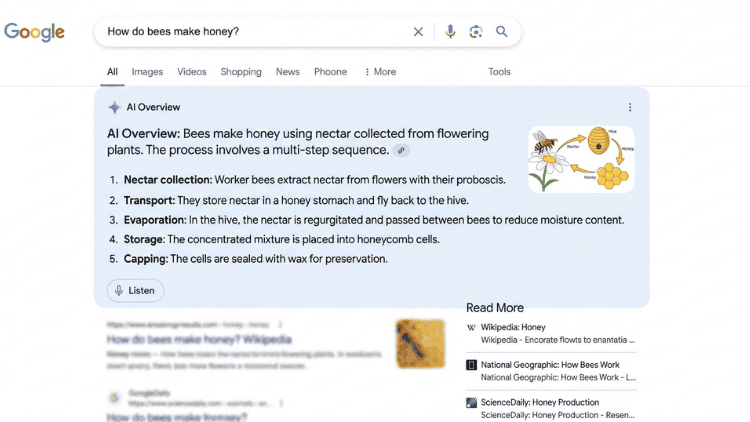


The Shift Toward Generative Search Visibility
Traditional search engine optimization focuses on blue links and SERP rankings. However, the rise of AI-powered platforms like ChatGPT and Perplexity has fundamentally changed how users discover businesses. These systems do not merely index pages; they synthesize information to provide direct answers. To succeed in this landscape, you must understand how to position your digital assets so that AI models perceive your content as a reliable, authoritative source worth citing.
Understanding AI Source Attribution
ChatGPT and Perplexity rely on Large Language Models (LLMs) and retrieval-augmented generation (RAG) to serve answers. When these models answer a user query, they look for high-authority, relevant, and structured data. To get your business cited in ChatGPT and Perplexity answers, your content must satisfy the logic these models use to evaluate trust and topical relevance.
The process is less about keyword stuffing and more about semantic clarity. AI engines look for:
- Topical Authority: Does your website consistently cover a specific niche?
- Factuality and Citability: Is your information presented in a way that is easily parsed as a statement of fact?
- Schema Markup: Do you use technical data structures to explain what your business does?
- High-Quality Backlinks: Are you mentioned by other reputable industry sites?
Steps to Enhance Your Visibility in AI Responses
Optimizing for generative engines requires a shift toward entity-based marketing. You want the AI to recognize your business name as an entity associated with specific services, locations, or products.
1. Leverage Structural Data and Schema Markup
AI models digest structured data far more efficiently than unstructured text. Implementing Schema.org markup—specifically LocalBusiness, Organization, and Product schemas—helps the AI understand your business identity. Ensure that your NAP (Name, Address, Phone number) information is identical across your website and third-party directories. This consistency provides the “ground truth” the AI needs to verify your entity before citing you.
2. Focus on Semantic Content Architecture
Instead of writing for keywords alone, write for concepts. Use clear, descriptive headings and concise paragraphs that directly answer common questions within your industry. When the AI scans your page, it should find a direct, factual answer that can be easily extracted and used in a summarized response. Use bullet points and tables, as these formats are highly favored by LLMs during the information extraction process.
3. Build Digital Presence and Authority
Perplexity, in particular, often pulls citations from news sites, industry publications, and reputable blogs. If your business is mentioned in authoritative industry journals or local news outlets, the likelihood of being cited increases significantly. Focus your off-page strategy on getting featured in high-quality, relevant digital spaces where your target audience congregates. This creates a network of signals that tells the AI your business is a legitimate expert in its field.
4. Prioritize Transparency and Accuracy
AI engines are programmed to avoid hallucinations, often relying on verifiable sources. Keep your content current. Outdated information or broken links can lead the model to de-prioritize your domain. Regularly audit your “About Us” and “Services” pages to ensure the information is precise and accurate. If you offer professional services, include credentials, case study summaries, and clear descriptions of your methodologies.
Common Pitfalls to Avoid
To successfully get your business cited in ChatGPT and Perplexity answers, you must avoid practices that trigger low-quality signals. Do not use AI to generate low-effort, generic content that does not add unique value. AI models are increasingly sophisticated at identifying repetitive, derivative text. If your content provides the same information as every other site, the LLM has no incentive to credit you.
Furthermore, avoid “cloaking” or hidden text, as these technical shortcuts confuse the model’s indexing process. Stick to transparent, user-centric web design. The goal is to make it as easy as possible for the AI to attribute the insight to you by providing clear, distinct value that is difficult for the AI to ignore.
The Future of AI Attribution
As AI search engines continue to evolve, the ability to command citations will become a critical competitive advantage. By focusing on entity recognition, schema implementation, and high-authority content, you move beyond traditional SEO. You start building a digital footprint that is optimized for the future of search. Start by auditing your current entity data and refining your content to ensure it answers the fundamental questions your customers are asking. If you are ready to refine your digital footprint for the AI era, review your current site architecture and align it with these entity-first principles.