
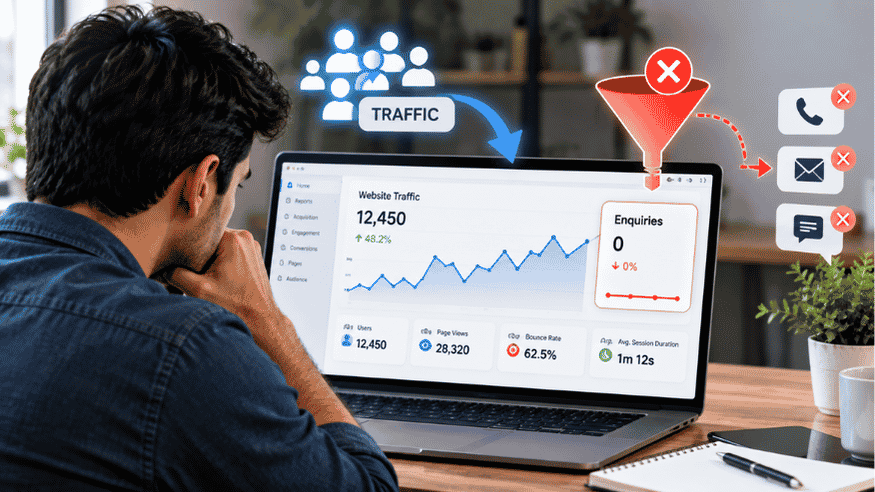
If your website gets traffic but no enquiries, the cause is almost always one of four things: the wrong visitors are arriving, the page does not match what they expected, the site does not build enough trust, or the path to getting in touch is too hard. Fixing conversion usually means fixing one of these, not buying more traffic.
It is one of the most common and most frustrating problems for business owners. Analytics shows hundreds or thousands of visits, yet the phone is quiet and the contact form is empty. The instinct is to chase more traffic. In most cases that makes the problem more expensive, not smaller.
This guide walks through why it happens and how to diagnose it step by step.
First: Is the Traffic Actually the Right Traffic?
Not all visitors are potential customers. Before changing anything on your site, check who is arriving.
- Informational visitors. People searching “what is” or “how to” questions may be researching, not buying. They are valuable later, but rarely enquire on a first visit.
- Wrong location. If you serve one area but attract visitors from elsewhere, they cannot become customers.
- Wrong intent. A page ranking for a broad term might attract students, competitors or job seekers rather than buyers.
- Low-quality referrals. Spam or irrelevant sources inflate traffic without any buying potential.
Check your landing pages and search queries in Google Analytics and Google Search Console. If your top traffic pages are blog posts answering general questions, and your service pages receive few visits, that gap explains a lot. Aligning content to what buyers actually search is the focus of semantic SEO, where pages are built around real intent rather than keyword volume alone.
The Seven Most Common Reasons Visitors Don’t Enquire
1. The message does not match the visitor’s expectation
Someone clicks a result promising one thing and lands on a page about something else, or a vague homepage. If the first screen does not confirm they are in the right place within a few seconds, they leave.
Fix: Make the headline and opening paragraph mirror the search intent. State clearly what you offer, who it is for and where you operate.
2. The value is unclear
Visitors should understand what you do, why it matters and what to do next without hunting for it. Jargon, generic claims (“quality service, great prices”) and walls of text hide your actual strengths.
Fix: Replace vague statements with specifics: outcomes, process, experience, typical timelines and who you work best with.
3. There is no clear call to action
If the only way to get in touch is a link in the footer, many people will not bother. Equally, five competing buttons create confusion.
Fix: Choose one primary action per page, such as “Request a quote” or “Book a call”, and make it visible at the top, in the middle and at the end of the page.
4. The site does not feel trustworthy
People hesitate to contact a business they cannot verify. Missing reviews, no real photos, no named people, no address and outdated design all signal risk.
Fix: Add genuine testimonials, case studies, team details, accreditations, a physical or service-area address, and visible contact information. Real specifics beat generic badges.
5. The site is slow or hard to use on mobile
A large share of visitors browse on phones. Slow loading, tiny text, overlapping elements and awkward forms push people away before they read a word.
Fix: Test on real devices, compress images, simplify layouts and make buttons easy to tap. If you suspect structural issues, our technical SEO services include performance and usability audits.
6. The enquiry form creates friction
Long forms, mandatory fields that are not needed, broken submissions or no confirmation message all kill conversions silently. Sometimes the form simply does not work, and no one notices.
Fix: Reduce fields to the essentials, test the form yourself on desktop and mobile, confirm that notifications reach the correct inbox, and offer alternatives such as phone, WhatsApp or email.
7. You are not tracking conversions properly
Without tracking for form submissions, calls and clicks on contact buttons, you are guessing. Sometimes enquiries are happening but are not being recorded.
Fix: Set up event tracking for forms, calls and email clicks, and compare results by traffic source and page.
A Simple Diagnostic Table
| Symptom | Likely cause | First thing to check |
|---|---|---|
| High traffic, very high bounce rate | Intent mismatch or slow page | Landing page vs search query, page speed |
| Visitors browse but never submit | Weak trust or unclear CTA | Testimonials, contact visibility, button placement |
| Many form starts, few completions | Form friction or errors | Field count, test submission, mobile usability |
| Traffic mostly from blog posts | Informational visitors | Whether service pages are ranking and linked |
| Traffic from irrelevant locations | Poor geographic targeting | Search Console country and query data |
| Enquiries seem to happen but are not recorded | Tracking gaps | Conversion events and inbox delivery |
Local Businesses: A Special Case
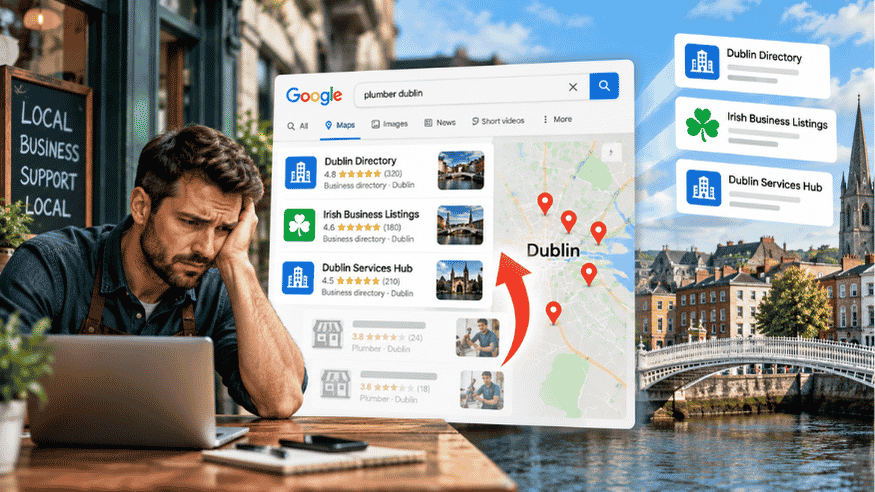
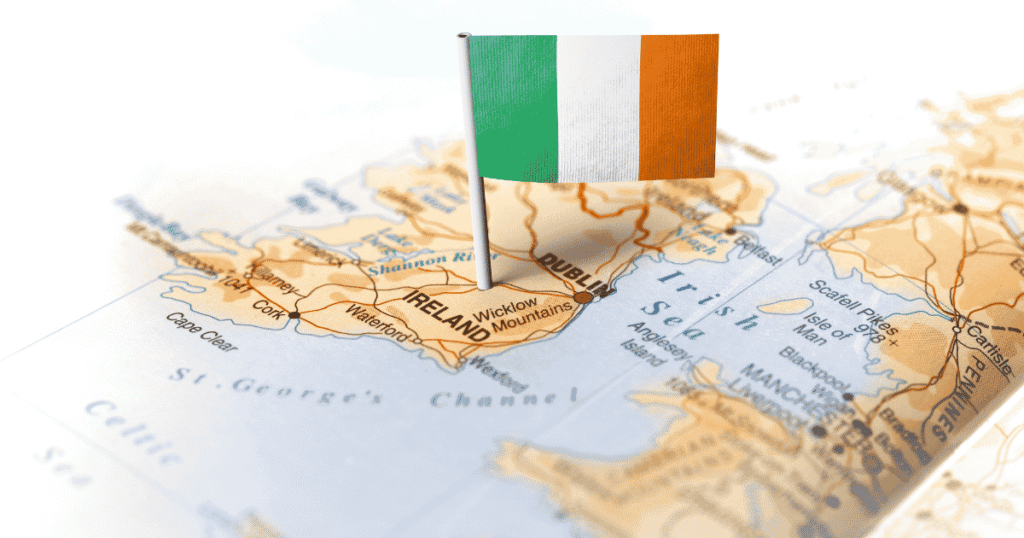
If you serve a specific area, traffic from outside it will never convert, and weak local signals can attract the wrong audience. Make sure your pages reference the places you actually serve and your business details are consistent. Our local SEO services are built to bring in nearby customers who are ready to act. If you operate in Ireland, see how we structure location-focused pages on our Ireland hub.
A 30-Day Plan to Improve Enquiries
Week 1: Diagnose. Review landing pages, traffic sources and search queries. Identify your top ten pages and ask what a visitor should do on each.
Week 2: Fix the basics. Test your contact form, check mobile usability and speed, and make sure your contact details are visible on every page.
Week 3: Improve persuasion. Rewrite the main headline and opening section of your top service pages. Add testimonials, proof of experience and one clear call to action.
Week 4: Measure and refine. Confirm conversion tracking is working, compare before and after, and pick the next page to improve.
When the Problem Is Bigger Than a Single Page
Sometimes poor conversion reflects deeper issues: a site structure that confuses visitors, content that attracts the wrong audience, or a design that was never planned around business goals. In those cases, a coordinated approach across strategy, content and build works better than isolated fixes. You can see how these pieces fit together across our digital growth services and wider SEO services.
Frequently Asked Questions
Why do I get website visitors but no leads? Usually because the visitors are not the right audience, the page does not match their expectations, trust signals are weak, or the contact process is difficult.
What is a good website conversion rate?
It varies widely by industry, offer and traffic source, so there is no single benchmark. Compare against your own past performance and improve steadily rather than chasing a universal number.
Will more traffic fix the problem?
Rarely. If the site is not converting current visitors, more traffic often just increases cost. Fix relevance, clarity and trust first.
How quickly can conversion improvements show results?
Simple fixes such as repairing a broken form or clarifying a call to action can have an effect within days. Larger improvements to content and structure usually take weeks to show clear patterns.
Can SEO and conversion work together?
Yes. Attracting qualified visitors and giving them a clear path to act are two halves of the same goal. Ranking without converting wastes the traffic you worked to earn.
Turn Visitors Into Enquiries
Traffic is only useful when it turns into conversations. If your site is attracting visitors but not business, get in touch and we will review where visitors drop off and what to change first.